
Property Manager’s Playbook for Asphalt Patching That Holds Up
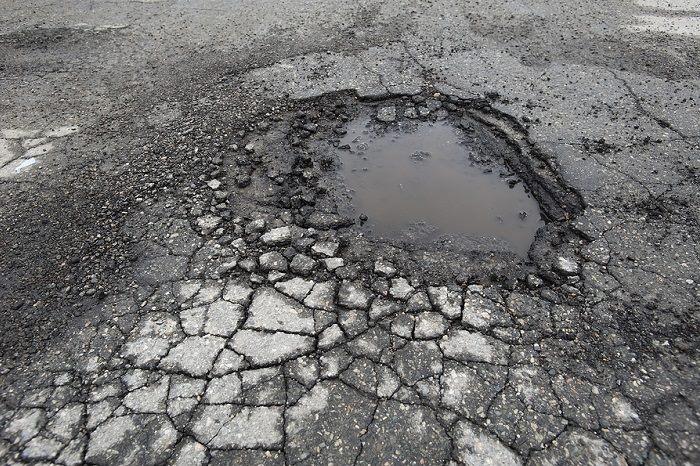 If you manage a commercial lot or drive lane, you already know the real cost of pavement damage is the disruption that follows. In Atlanta, heat, heavy rain bursts, and constant turning traffic can turn a small soft spot into a tenant complaint or a safety issue fast.
This guide gives you a practical way to choose the right patch approach, set the scope, and schedule work so you restore smooth access without setting yourself up for repeat repairs.
Key Takeaways
- The best patches start with a quick diagnosis of whether the problem is surface wear or base failure.
- Patch selection should match traffic patterns, especially in turning zones and loading lanes.
- Drainage issues can shorten patch life fast, so fix the water path along with the hole.
- A good scope and a phased schedule protect tenant access and prevent project creep.
The Repair Ladder for High-Traffic Pavement
Around I-285 and the I-75/I-85 connectors, pavement takes a daily beating from delivery vans, rideshares, and heavy truck routes. The right repair starts with diagnosing why the surface failed, so the patch matches the load and the site’s drainage reality.
Confirm Whether the Failure Is Surface or Structural
In places like Perimeter Center office parks, what looks like a pothole is often a base problem showing through the top layer.
If the area feels soft underfoot, rebounds under a tire, or keeps cracking in the same pattern, the failure is usually deeper than the surface.
We start by mapping the distressed area and checking how far the damage spreads past the visible edges, because the cut line is where long-term performance is won or lost.
Match the Patch Type to Traffic and Access Risk
A light-duty patch that survives a small visitor stall may not survive a loading lane behind a retail strip in Buckhead, where trucks pivot and brake hard.
For localized issues with a stable base, a properly placed hot-mix patch can restore a smooth, safe surface with limited downtime.
When the base is compromised, full-depth “remove and replace” is typically the better investment because it rebuilds the structure that keeps the new asphalt from flexing and unraveling.
Design the Cut, Tack, and Compaction for a Seam That Stays Tight
In Midtown garages and mixed-use entries, the seam matters because turning tires love to pick at weak edges.
A clean, squared cut line, proper bonding between old and new material, and tight compaction are what keep water from sneaking under the patch during a summer storm.
Our crews focus on building a patch that finishes flush and transitions smoothly, because a patch that sits proud or dips low becomes a new impact point for wheels and plows.
Fix the Drainage Trigger Before You Patch Again
If water ponds near a catch basin or low spot, patching the hole without addressing the water path is usually a short-term win.
This shows up often in older shopping centers along corridors like Memorial Drive, where grades have settled over time, and runoff concentrates in the same places.
Even small corrections, like restoring positive flow or addressing a sunken area, can reduce repeat failures and help the repair last through the next round of heavy rains.
Plan the Next Step: Sealcoating, Striping, or Milling When Needed
Near high-visibility entrances in Sandy Springs or Decatur, a good patch should blend into a maintenance plan instead of becoming a permanent patchwork look.
If the surface is generally sound but drying out and cracking, sealing and crack work after repairs can help slow down oxidation and water intrusion.
If the top layer is widely worn, milling and resurfacing may be the cleaner path because it resets the driving surface across larger zones and reduces the number of seams that can reopen.
Scheduling, Access, and Approvals for a No-Drama Patch Day
In Atlanta’s retail and industrial properties, the best repair plan fails if it blocks deliveries, interrupts tenant peak hours, or leaves unclear boundaries for traffic control.
Getting the schedule and scope right upfront reduces surprises, protects uptime, and helps your team communicate confidently with occupants.
Stage Work Around Deliveries, Tenants, and Peak Hours
A distribution site near Camp Creek Parkway runs differently from a storefront near Piedmont Avenue, so the work plan has to match the site’s rhythm.
Identify your true “no-go” windows first, like morning deliveries, school pickup traffic, or weekend event surges, then build the phasing around those constraints.
When we plan patching with you, we focus on keeping at least one reliable route open for emergency access and essential deliveries.
Set a Clear Scope and Measurable Finish Standards
Patching can creep if “pothole repair” is the only description, especially on lots with scattered failures near dumpster pads and service drives.
Define the repair boundaries by area, depth, and method so you can compare quotes and avoid change orders that come from vague assumptions.
It also helps to agree on finish expectations, like smooth transitions, tight edges, and how depressions or rutting will be handled if they extend beyond the initial cut.
Know What to Document for Ownership and Risk Teams
For multi-tenant properties along GA-400 or near major interchanges, documentation matters almost as much as the asphalt.
Capture before-and-after photos, repair locations, and any notes about drainage or base conditions so future budgets reflect what the pavement is telling you.
Keeping a simple repair history also helps explain why certain areas moved from patching to resurfacing, which makes capital planning conversations easier.
Talk With Ace Paving About a Targeted Repair Plan
If you’re dealing with recurring potholes, soft spots, or failing seams in high-turn areas, our team at Ace Paving can help you pinpoint whether the issue is surface wear, base failure, or drainage pressure before you spend money in the wrong place.
Across Metro Atlanta sites near GA-400, I-285, and busy retail corridors like Perimeter Center, we build a clear scope that matches your traffic patterns and keeps access predictable for tenants and deliveries.
For a straightforward plan for asphalt patching and any related needs like milling, resurfacing, sealcoating, striping and ADA markings, concrete flatwork, or drainage fixes, reach out to us.
Frequently Asked Questions
How long does asphalt patching last in a commercial parking lot?
Lifespan depends on traffic load, drainage, and whether the failure was structural or surface-level. A well-built hot-mix repair on a stable base can last for years, while a patch placed over a soft base often breaks down sooner. Keeping water out and addressing repeated turning stress are two of the biggest factors.
Is a cold patch okay for a business property?
A cold patch can be useful as a short-term safety fix when you need immediate hazard reduction, or weather limits your options. It typically does not perform like a properly compacted hot-mix repair in high-traffic zones. Many properties use it as a stopgap and then schedule a permanent repair when conditions are right.
When should a property manager choose full-depth patching instead of a surface patch?
Full-depth work is usually the better call when the area is pumping, soft, or repeatedly cracking in the same spot. It also makes sense in truck lanes, dumpster approaches, and places where braking and turning concentrate stress. Rebuilding the failed section reduces the chance of paying to patch the same location again.
What is the least disruptive way to patch a busy lot?
Phasing is the key: break repairs into zones that keep primary entrances, fire lanes, and essential delivery routes available. Scheduling around tenant peak hours and clearly marking closures reduces confusion and complaints. Clear scope and traffic control planning matter as much as the repair itself for a smooth patch day.
How to Plan for Long-Term Maintenance After New Construction Asphalt Installation
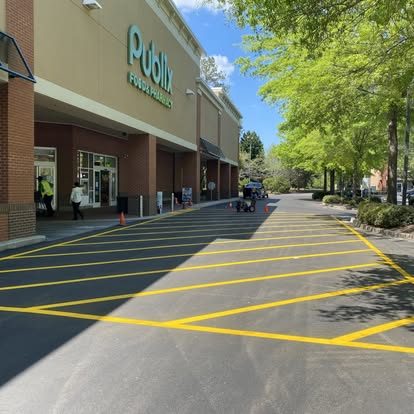 In Atlanta, new commercial asphalt often looks flawless on day one, then starts to show wear faster than expected once summer heat, delivery traffic, and heavy rain cycles set in.
Long-term performance depends less on the installation day and more on what happens in the months and years after. We see this across office parks in Buckhead, retail centers near Perimeter Mall, and industrial sites along I-285.
Planning maintenance early protects your capital investment and keeps your property compliant, safe, and professional. That starts with a proactive strategy and clear triggers for professional service.
Key Takeaways
- Long-term asphalt performance in Atlanta depends on early planning after installation.
- Multi-year maintenance budgets reduce emergency repairs and capital surprises.
- Professional inspections should align with seasons, traffic changes, and visible distress.
- Preventive maintenance extends pavement life and protects commercial property value.
Establish a Baseline After the Cure Period
After new asphalt installation, the surface needs time to cure before any protective treatments begin. In Atlanta’s warm climate, curing typically takes 60 to 90 days, depending on traffic load and exposure. We document the pavement condition after this period to create a baseline that reflects real-world use at sites like warehouse corridors near Fulton Industrial Boulevard.
This baseline helps track aging, oxidation, and early surface wear.
It also gives facility managers a defensible starting point for maintenance planning. Avoid sealcoating too early, but inspect as soon as curing is complete.
Build a Multi-Year Maintenance Budget
Commercial asphalt performs best when maintenance costs are planned across multiple years instead of handled as emergencies. In the Atlanta market, a realistic budgeting window is five to seven years for surface treatments and localized asphalt repairs.
High-traffic properties near Hartsfield-Jackson Atlanta International Airport often need earlier intervention due to fuel drips and constant turning movements. We help owners forecast costs based on traffic volume, drainage conditions, and exposure to sun and shade.
This approach smooths expenses and avoids surprise capital requests. Treat asphalt like an asset with scheduled funding, not a reactive line item.
Schedule Preventive Treatments Early
Preventive maintenance costs far less than structural repairs in Georgia’s climate.
Sealcoating, crack sealing, and joint sealing slow oxidation caused by intense UV exposure and summer heat. On properties with large open parking lots in areas like Alpharetta or Cumberland, untreated asphalt can dry out quickly and lose flexibility. We typically recommend the first sealcoat within 12 to 18 months after installation, assuming proper curing.
This timing preserves surface oils and improves water resistance. Early prevention extends pavement life and delays major rehabilitation.
Plan for Drainage and Water Management
Water is one of the biggest threats to commercial asphalt in metro Atlanta. Heavy rainfall events can overwhelm poorly designed drainage and force water into pavement seams. We often see this at properties near creeks or low-lying areas in South Atlanta, where ponding accelerates base failure. A maintenance plan should include routine drain inspections and cleaning. Addressing drainage early protects both the surface and the subgrade.
The takeaway is that asphalt maintenance and stormwater management go hand in hand.
When to Schedule Professional Inspections and Ongoing Service for Commercial Asphalt
After the First Full Summer and Winter Cycle
Atlanta’s asphalt experiences extreme heat in summer and mild freeze-thaw cycles in winter. After the first full seasonal cycle, subtle issues often emerge. These can include early cracking, surface raveling, or joint separation, especially in shaded office complexes near Midtown.
A professional inspection at this stage confirms whether the pavement is aging as expected.
It also validates that the base and drainage are performing properly. One-year inspections catch issues while repairs remain minor.
When Traffic Patterns Change
Commercial properties evolve, and traffic patterns often change after leasing or expansion.
A retail center that adds delivery tenants or a logistics hub that increases truck volume along I-75 will stress asphalt differently. These changes can cause localized rutting or fatigue cracking.
We recommend inspections whenever traffic loads increase or circulation patterns shift. This allows for targeted reinforcement instead of full resurfacing.
Always align asphalt inspections with operational changes.
At the First Signs of Cracking or Surface Distress
Cracks are not just cosmetic on commercial asphalt.
In Atlanta’s rainy climate, they allow water infiltration that weakens the base. Early signs often appear near loading docks, dumpster pads, and curb returns. Scheduling professional service at the first visible cracking keeps repairs limited to sealing instead of patching.
This is especially important for properties governed by local safety and accessibility standards. Early response protects both pavement and liability exposure.
Before Major Capital or Leasing Decisions
Professional asphalt evaluations support smarter business decisions.
Before refinancing, selling, or signing long-term leases, many Atlanta commercial owners request pavement condition reports. These are common for office parks near Lenox Square and industrial sites near the Port of Savannah trucking corridors.
An inspection provides realistic remaining-life estimates and repair timelines.
This information helps avoid last-minute repairs that delay transactions. Asphalt condition affects asset value and planning.
Plan to Protect Your Commercial Asphalt Investment
Ignoring long-term maintenance leads to higher costs, downtime, and safety concerns for Atlanta commercial properties. Planning early reduces risk and extends pavement life.
At Ace Paving, we work with commercial owners and facility managers to build maintenance plans that match traffic, climate, and budget realities. Our team schedules inspections, preventive treatments, and long-term forecasts so you stay ahead of problems.
Contact us today to request a commercial maintenance plan or schedule a professional asphalt evaluation within the next 30 days.
Frequently Asked Questions
How soon should I plan maintenance after a new commercial asphalt installation in Atlanta?
Planning should begin immediately after installation, with the first formal inspection scheduled once the asphalt completes its 60- to 90-day cure period under Georgia climate conditions.
How often should commercial asphalt be inspected in high-traffic Atlanta locations?
Annual inspections are standard, but properties with heavy truck traffic or fuel exposure may need semi-annual reviews to stay ahead of fatigue and surface breakdown.
Does Atlanta weather shorten the lifespan of commercial asphalt?
Heat, UV exposure, and heavy rainfall can accelerate aging, which is why sealcoating, crack sealing, and drainage checks are essential parts of a local maintenance plan.
Can proactive maintenance reduce long-term repaving costs?
Yes, preventive treatments and early repairs significantly delay the need for full resurfacing or reconstruction, which are the most expensive asphalt services.
What Happens to Asphalt Without Regular Asphalt Resurfacing?

Atlanta‘s weather is tough on pavement. The mix of summer heat bouncing off parking lots in Buckhead and the heavy rain that drains across drive lanes near Piedmont Park puts steady stress on asphalt.
When resurfacing falls behind, the damage compounds fast and turns simple maintenance into expensive rehab. The short answer is that neglected asphalt loses structure, loses safety, and loses life far sooner than property owners expect.
Below, we break down what actually happens and how to evaluate resurfacing timing with a local lens.
Key Takeaways
- Neglected asphalt moves through predictable stages of oxidation, cracking, and structural failure.
- Atlanta’s heat and heavy rainfall speed up deterioration when resurfacing falls behind.
- Traffic, drainage, and edge wear help determine resurfacing timing.
- Early resurfacing reduces long-term repair costs and protects the base layer.
Stages of Asphalt Deterioration When Resurfacing Is Neglected
We see the same deterioration pattern across Atlanta parking lots and private roads when asphalt resurfacing cycles are skipped.
1. Early Oxidation and Color Loss
In the first stage, the surface dries out and turns gray as oxygen binds with the asphalt binder and makes it brittle. We see this most quickly in open lots around Midtown, where long sun exposure accelerates the process.
Once the binder gets brittle, hairline cracks spread across drive lanes and parking stalls.
This early change seems cosmetic, but it sets up the pavement for deeper damage when the next round of summer heat hits. Staying ahead of oxidation extends the life of the base layer and keeps the surface from unraveling.
2. Surface Cracking and Water Infiltration
As oxidation progresses, thin cracks widen, and water begins to penetrate the asphalt.
In neighborhoods like Kirkwood and East Lake, heavy afternoon storms wash through these cracks and reach the subbase. Water under asphalt weakens the structure and causes the pavement to flex and shift under traffic.
Over a few seasons, this leads to edge failures along curbs and low spots near storm drains. We recommend tackling resurfacing before this stage because water damage multiplies quickly once it reaches the base.
3. Aggregate Loss and Raveling
Without resurfacing, the binder can no longer hold the stone aggregate together, and small pieces begin to loosen from the surface. This raveling usually shows up around high-traffic entry lanes at shopping centers in Sandy Springs. As vehicles brake and turn, the loosened stones scatter and leave behind a rough, uneven texture.
The remaining surface becomes more porous and absorbs even more water.
At this point, the pavement’s lifespan drops sharply, and resurfacing becomes more involved than it would have been earlier.
4. Potholes and Structural Breaks
Once water and traffic stress weaken the base, potholes form. These are the familiar round or irregular depressions that show up after heavy winter rain around areas like Cascade Road.
Potholes grow because the surrounding asphalt loses support and breaks off.
When multiple potholes form in a lane, the structural integrity is already compromised. Full-depth asphalt repairs may be needed, and resurfacing alone might not fix the deeper issues.
Acting before potholes form is one of the biggest cost savers for Atlanta property managers.
5. Widespread Fatigue and Alligator Cracking
The final stage is fatigue failure, often called alligator cracking because of the split pattern. We see this in older access roads around business parks in Mableton, where resurfacing has been deferred for too many cycles. The interconnected cracks show that the base can no longer support vehicle loads.
Once this pattern appears, resurfacing may not be enough; the pavement often needs reclamation or full reconstruction. Avoiding this stage is the main reason resurfacing cycles matter in our humid, high-traffic region.
What to Evaluate When Deciding on Timely Asphalt Resurfacing
A few consistent conditions help determine when resurfacing will save money and extend pavement life in Atlanta.
Level of Traffic Stress on the Pavement
Traffic volume and vehicle type determine how quickly asphalt ages.
Properties near I-285 access points in Vinings see more heavy trucks, delivery vans, and regular turning movements, all of which increase shear stress on the surface. Higher stress demands shorter resurfacing cycles to stop cracks from spreading down to the base.
We guide property owners to track traffic changes such as new tenants, more deliveries, or expanding parking needs. These patterns influence resurfacing timing just as much as weather.
Drainage Conditions and Water Movement
Drainage problems speed up failure in almost every Atlanta neighborhood because our region receives heavy seasonal rainfall. Lots near the Chattahoochee River often have saturated soil that softens the base under asphalt.
If standing water forms around gutters or low points, the pavement deteriorates faster, and resurfacing intervals shorten. We check slope, drain placement, and any ponding that forms after storms to recommend resurfacing schedules that match actual water exposure.
Condition of Joints, Edges, and High-Wear Areas
Even if the center lanes look fine, the edges and joints often tell the real story.
At office parks around Perimeter Center, the edges near concrete curbs tend to crack first because the asphalt meets a rigid structure. Entry points, dumpster pads, and drive-through lanes wear faster and show early raveling. When these areas start to break down, the rest of the surface usually follows within a few seasons.
Targeted resurfacing before the edges fail gives the entire lot more usable life.
Age of the Asphalt and Previous Maintenance
Most Atlanta asphalt needs resurfacing every 10 to 15 years, but that range shifts depending on care. Older lots in Decatur that have gone many years without sealcoating reach resurfacing time earlier.
We look at the maintenance history to evaluate binder strength and subbase condition.
If past crack sealing or patching was skipped, resurfacing should happen sooner to prevent structural damage. The longer the gap since the last major service, the faster deterioration accelerates once issues begin.
Environmental Exposure and Heat Cycles
Atlanta’s heat cycles are intense. Summer highs often push over 90 degrees, and heat radiates off dark pavement in places like Downtown and Little Five Points. The binder softens during peak heat and then tightens again as temperatures cool at night. These cycles cause movement that leads to early brittleness when resurfacing is overdue.
We consider shade, open exposure, and nearby reflective surfaces when recommending resurfacing intervals tailored to local conditions.
Protect Your Asphalt Before Damage Escalates
Small pavement problems grow faster than most property owners expect. That stress increases your costs and disrupts traffic patterns on your lot.
At Ace Paving, we evaluate the condition of your pavement, explain the true stage of wear, and guide you to resurfacing at the right moment. We help you prevent deeper damage, extend pavement life, and keep your property safe and clean.
Contact us today to schedule an on-site assessment and get a resurfacing quote this week.
Frequently Asked Questions
How can I tell if my older Atlanta asphalt is too far gone for resurfacing instead of replacement?
We look for signs like deep alligator cracking, base movement, and multiple potholes that stay wet after storms. In areas like East Point, these conditions usually mean the base has failed, and resurfacing will not bond well. We assess the depth of damage and the condition of the subbase before recommending a full reconstruction or a resurfacing option.
How often should we plan resurfacing for a busy commercial lot in Buckhead?
High traffic properties near Lenox Square often need resurfacing every 8 to 12 years. We factor in truck loads, turning movements, and heat exposure before setting a schedule. Regular crack sealing and sealcoating can extend that timeline, but we evaluate the surface yearly to keep the pavement from slipping into structural damage.
Does poor drainage always shorten the resurfacing cycle?
Poor drainage in low areas around Westside and Grant Park usually accelerates wear because water gets into the joints and softens the base. We inspect slopes, gutter lines, and any ponding after storms. Improving drainage can add years to a resurfacing cycle and prevent edge failures.
Can resurfacing fix rough or uneven spots on private access roads in Mableton business parks?
Resurfacing can correct minor uneven areas if the base is stable, but it will not solve soft spots or underlying base failures. We check compaction and moisture levels in the subbase before recommending resurfacing for commercial pavement. If the base is solid, resurfacing smooths the access road and restores a uniform driving surface.
7 Signs Your Property Needs Commercial Asphalt Repair
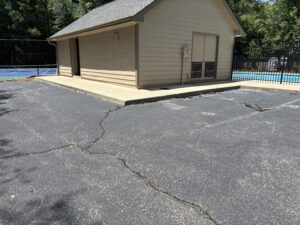 When customers pull into your parking lot, the condition of your asphalt says a lot about your business. Cracked, faded, or uneven pavement doesn’t just hurt curb appeal. It can cause safety hazards, drainage problems, and even liability issues.
If you manage a shopping center in Buckhead, an office complex near Downtown, or a warehouse along Fulton Industrial Boulevard, your pavement faces constant stress. The key to avoiding major replacement costs is catching the early warning signs before they spread.
Let’s look at seven signs your Atlanta property needs commercial asphalt repair, along with what you can do once you spot them.
Key Takeaways
- Atlanta weather and traffic often damage asphalt, causing cracks, potholes, fading, and other visible signs of wear.
- Each issue, such as loose gravel or standing water, shows deeper pavement problems that need quick professional attention.
- Regular inspection, crack repair, sealcoating, and patching keep Atlanta asphalt strong and safe for daily use.
- Reliable care helps local businesses maintain smooth, durable, and professional-looking parking lots year-round.
1. Potholes Forming After Heavy Rain
Atlanta’s weather swings between hot summers and sudden downpours, which can quickly worsen small cracks into full-blown potholes. Parking lots along Peachtree Road or near Lenox Square often face water pooling that seeps beneath the surface, weakening the base.
Once water freezes in the winter or sits too long during rainy weeks, the asphalt breaks apart. Potholes not only damage vehicles but also create safety hazards for pedestrians.
2. Faded or Graying Pavement Color
Asphalt that once looked deep black but now appears faded or gray is a clear sign of oxidation from constant UV exposure.
Between the intense Georgia sun and high traffic near areas like Midtown or the BeltLine, the binder in the asphalt starts breaking down. When this happens, the surface becomes brittle and more vulnerable to cracking and water damage.
3. Standing Water After Storms
If puddles remain long after the rain stops, your parking lot might have drainage problems or surface depressions. In low-lying areas such as those around the Chattahoochee River or near West End, poor drainage accelerates asphalt deterioration.
These dips trap water, allowing it to penetrate the surface and compromise the foundation.
4. Cracking Across the Surface
Cracks are the earliest warning signs of trouble. From spiderweb-like “alligator” cracks near entrances to long linear cracks running through delivery zones, each type signals a different underlying issue.
In Atlanta’s fluctuating climate, expansion and contraction cycles from temperature changes cause cracks to spread fast if left untreated.
5. Uneven or Sinking Areas
When certain spots begin to sink or feel uneven underfoot, the sub-base has likely shifted or eroded. This often happens in older business parks around Decatur or industrial zones near Fulton Industrial Boulevard.
Heavy trucks, delivery vans, and poor soil compaction can all contribute to surface depressions that require immediate attention.
6. Loose Gravel or Deteriorating Edges
If you notice loose gravel forming at the edges or along drive lanes, your asphalt surface may be unraveling.
This is common along driveways leading into older properties or near loading docks. The problem usually starts at the edges where the asphalt meets grass or dirt, allowing moisture to penetrate and erode the binding materials.
7. Faded Striping and Traffic Markings
When the lines designating parking spots, crosswalks, or directional arrows fade, it’s more than a cosmetic issue—it affects safety and compliance. Businesses along busy corridors like Howell Mill Road or near Georgia Tech need clear markings for smooth traffic flow.
If your striping looks worn, it’s a sign your surface has aged and could benefit from sealcoating or repairs before repainting.
Steps to Take When You Notice These Signs
Schedule a Professional Inspection
The first step after spotting any of these signs is to call a professional paving contractor for a detailed inspection. In Atlanta, an experienced team can assess whether your lot near Ponce City Market or the Perimeter area needs crack sealing, resurfacing, or full reconstruction.
A thorough inspection ensures you address root problems instead of just surface symptoms.
Sealcoat to Protect from Future Damage
Sealcoating every few years helps protect your asphalt from UV rays, oil spills, and water penetration.
For Atlanta businesses with high-traffic lots, such as restaurants in Virginia-Highland or retail centers in East Atlanta Village, this preventive step can double the lifespan of your pavement while keeping it looking sharp and professional.
Repair Cracks Early
Crack filling should never be postponed.
Once moisture enters, it widens and deepens the damage. In areas like Sandy Springs or Brookhaven, where tree roots and shifting ground are common, regular crack repair prevents expensive structural repairs later. Professionals use hot rubberized crack sealant that adapts to Atlanta’s seasonal temperature swings.
Patch Potholes Promptly
Potholes left unattended grow quickly, especially with constant rain or traffic.
Proper patching involves cutting around the hole, cleaning out debris, applying tack coat, and compacting fresh asphalt. Fast action keeps your lot safe for vehicles and prevents liability issues—a must for businesses near downtown or airport traffic.
Address Drainage and Grading Issues
If water pools in your lot, drainage improvements are essential.
In flood-prone areas like near Peachtree Creek or the South River, adding or regrading drains can save your pavement from early failure. Professional contractors can also install proper slope gradients to ensure rainwater flows away from the surface efficiently.
Refresh Pavement Markings
Once the asphalt is repaired or sealed, repainting parking lines and directional markings restores both functionality and curb appeal.
Using high-visibility, reflective paint ensures compliance with ADA and safety regulations—particularly important for public areas around downtown offices and medical complexes.
Set a Maintenance Plan
A consistent maintenance schedule keeps your investment protected year-round. Atlanta’s mix of hot summers and occasional ice in winter means you should plan inspections and minor asphalt repairs twice a year.
Partnering with a reliable paving company ensures small issues never turn into major disruptions for your business.
Protect Your Pavement Investment Today
At Ace Paving, we help Atlanta businesses keep their parking lots and driveways in top condition year-round. From crack sealing and pothole repair to sealcoating and re-striping, we handle every stage of asphalt care using materials built for Georgia’s climate. If you’ve noticed any of these warning signs on your property, now’s the time to act before small issues become major repairs.
Contact us today to schedule your commercial asphalt inspection and keep your Atlanta property safe, attractive, and ready for business.
Frequently Asked Questions
How long does commercial asphalt repair usually take in Atlanta?
Most commercial asphalt repair projects in Atlanta take one to three days, depending on the property size and damage level. At Ace Paving, we plan repairs efficiently to reduce downtime and restore full access quickly.
What type of asphalt mix works best for Atlanta’s weather?
Hot-mix asphalt formulated for Georgia’s climate provides the best durability. Ace Paving uses high-quality materials designed to handle Atlanta’s heat, humidity, and rainfall, giving commercial properties smoother, longer-lasting pavement surfaces.
Can asphalt repairs be completed during the winter months in Atlanta?
Yes, asphalt repairs can be performed in cooler months using cold-mix materials or heated solutions. Ace Paving adapts to Atlanta’s seasonal conditions to ensure durable results and consistent pavement performance year-round.
How often should a commercial parking lot be resealed in Atlanta?
Commercial parking lots in Atlanta typically need sealcoating every two to three years. Ace Paving recommends regular resealing to block UV rays, prevent moisture intrusion, and keep surfaces looking professional longer.
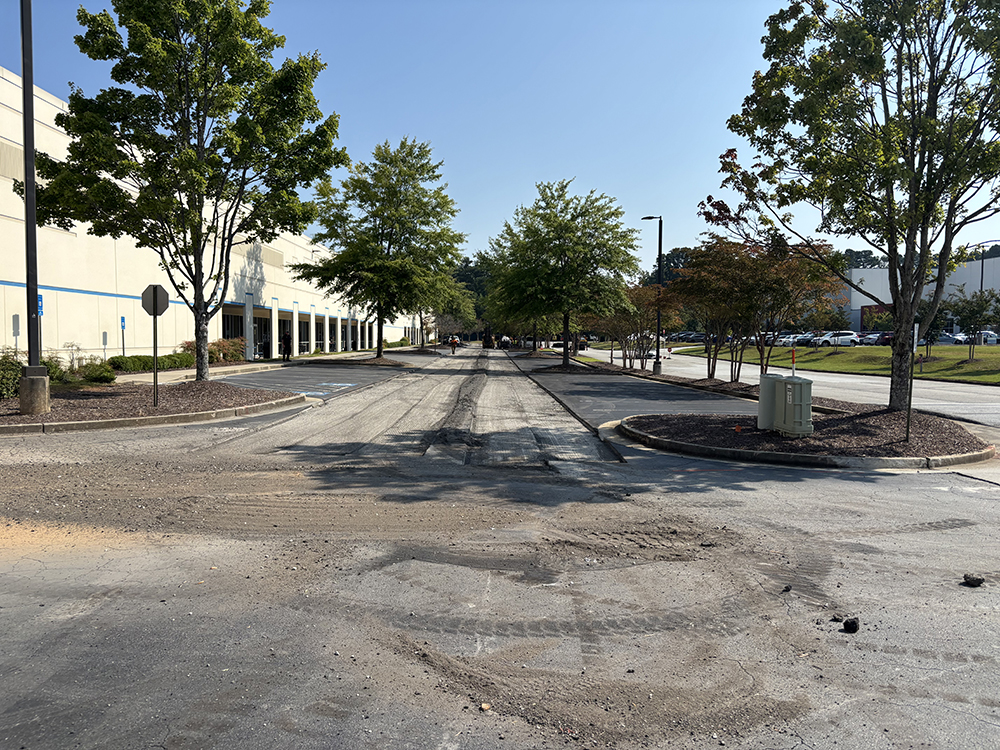
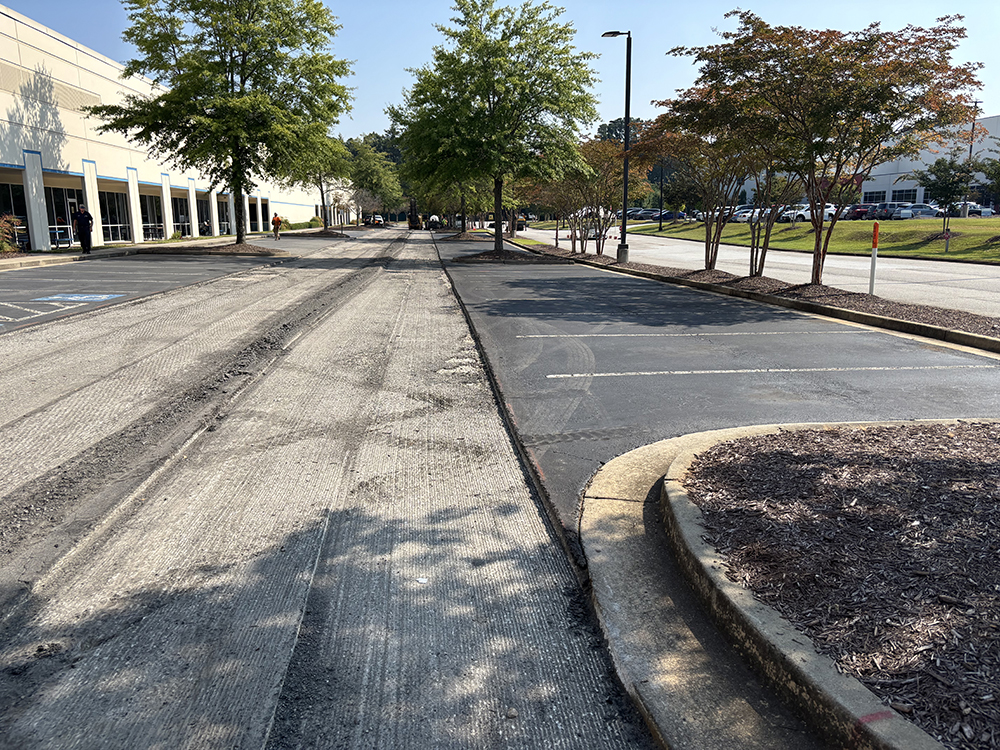
Smoothing the Way: How We Revitalized a High‑Traffic Drive Lane in Buford, GA
When a commercial property approaches us saying their drive lanes feel like a roller coaster—and their customers agree—we know there’s a real opportunity to make a lasting difference.
That was precisely the situation for a facility in Buford, GA. Their drive lanes had grown battered over years of constant traffic, and they reached out to Ace Paving with a clear goal: restore smooth, safe, and visually professional drive lanes without shutting down the property.
Here’s how we delivered.
The Situation: Aging Asphalt Under Constant Pressure
Located in Buford, this commercial site sees heavy automotive traffic day-in and day-out—employees, visitors, deliveries.
Over time, the drive lanes developed cracks, ruts, and uneven transitions that not only diminished curb appeal but also posed safety risks, especially when wet or during freezing temperatures.
Complicating matters:
- The drive lanes bordered landscaped medians and parking lots, leaving little room for error
- Vehicles needed constant access during working hours
- A complete shutdown of the facility was not feasible
- The client requested a solution with long-lasting durability and aesthetic appeal
In short, we had to restore the drive lanes under constraint, with precision, and with minimal disruption.
Planning & Preparation: Working Around Activity
Before moving any machinery in, we walked the site with the client, mapping out traffic flow, access points, and staging zones. The goal was to maintain operational continuity for businesses and employees.
To accommodate the narrow lanes next to medians and stalls, we designated:
- Alternate routes for traffic
- Staged demolition and paving zones in sequenced sections
- Buffer zones to protect adjacent landscaping
We also scheduled much of the demolition and paving work during off-peak periods—early mornings, evenings, or weekend windows—to reduce conflict with normal business operations.
Execution: Milling, Grading & Precise Paving
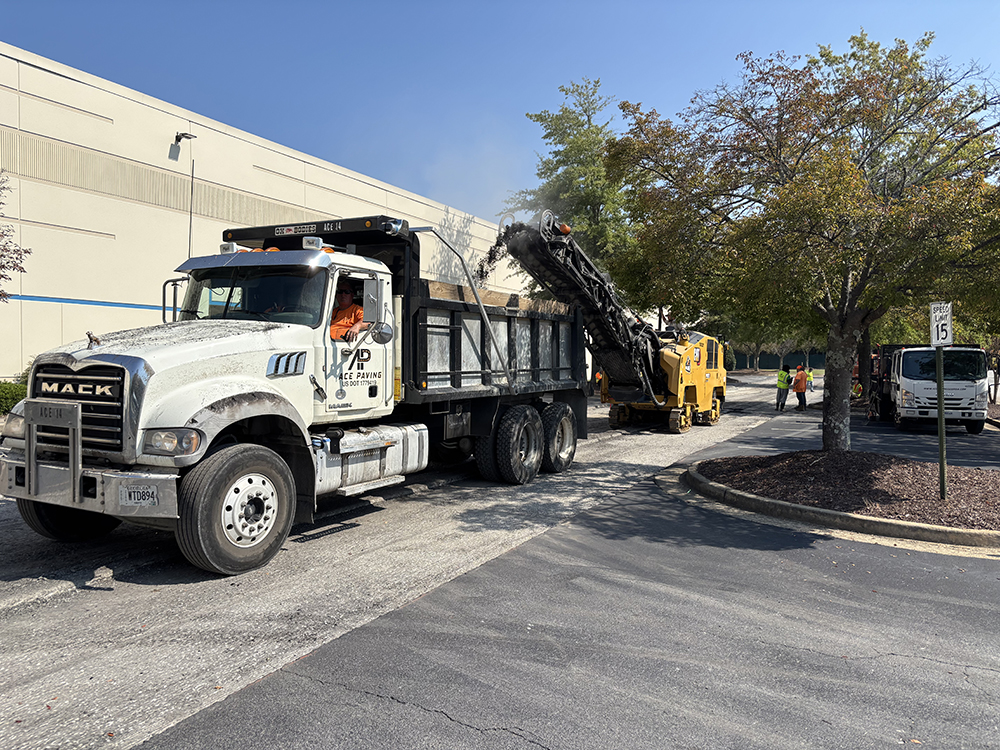
Step 1: Asphalt Milling
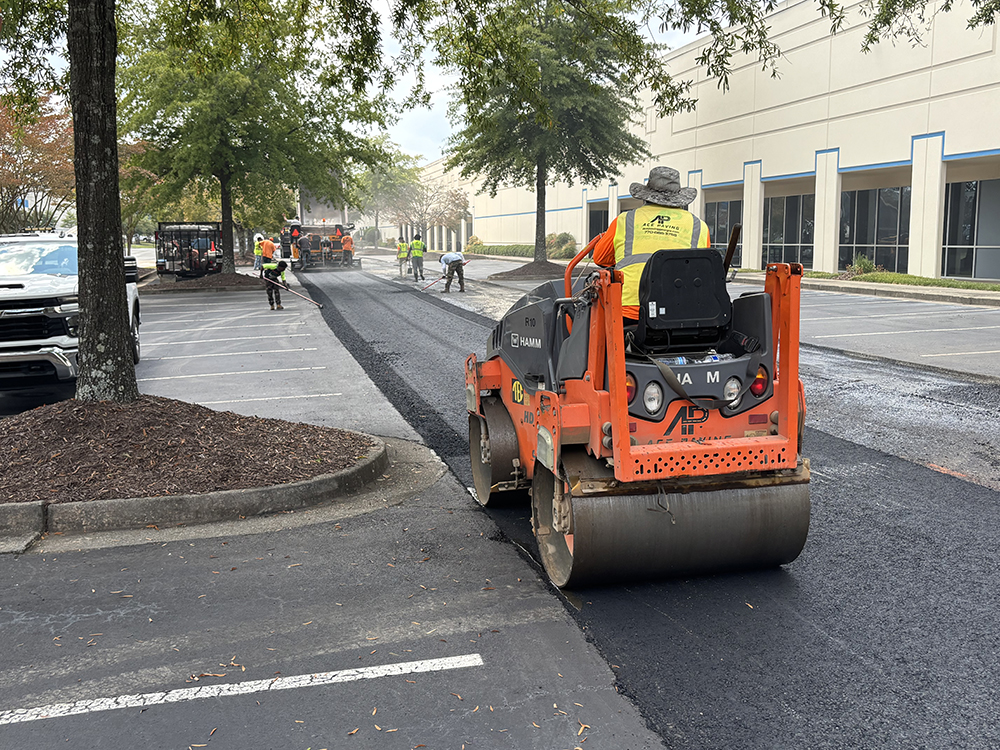
We deployed a milling machine to remove the deteriorated top surface of the drive lanes, precisely cutting away only what was necessary. This left the underlying base intact and ready to accept a new layer.
Because of the constrained space, our operators calibrated the milling width carefully, avoiding any overlap into landscaped islands or parking areas.
Step 2: Debris Removal & Leveling
Dump trucks hauled away the milled asphalt, while our crew swept and cleaned the exposed surface. Then, we leveled the milled base, checking grades and slopes to ensure proper drainage and evenness.
Step 3: Hot Mix Asphalt Placement
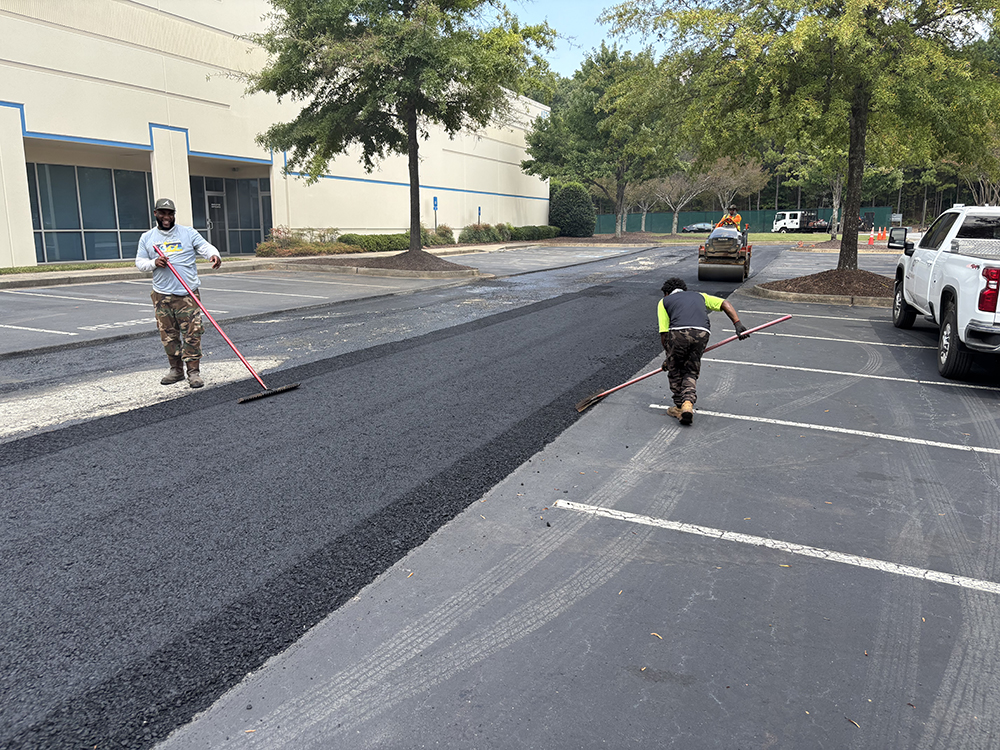
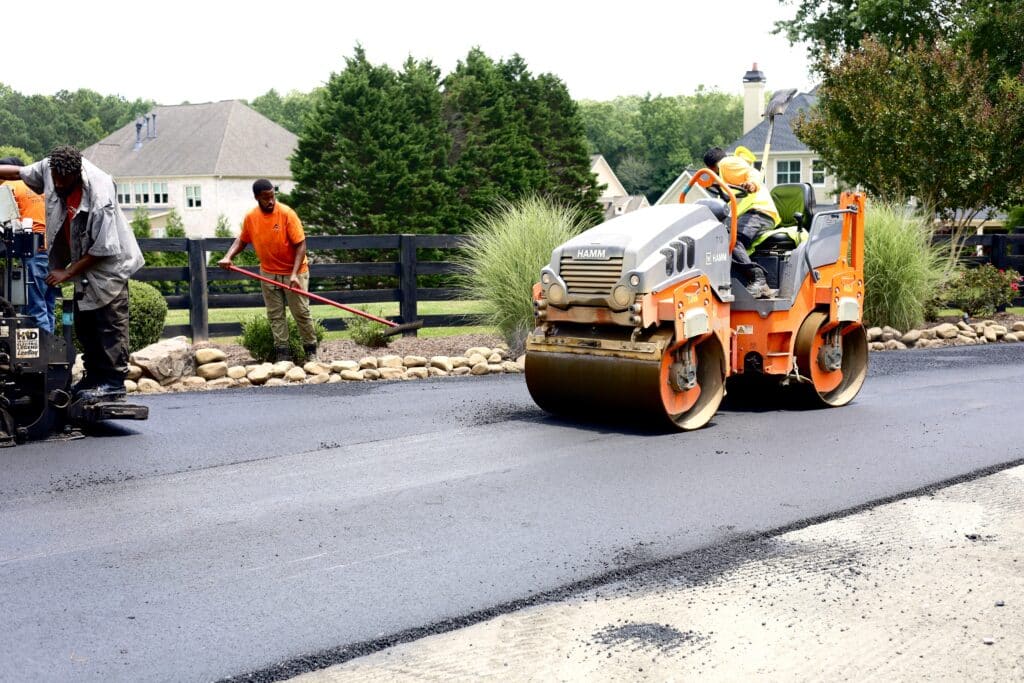
With the subgrade prepared, we brought in the paver. We applied new hot mix asphalt in multiple passes—edge passes first, then infill. Each pass made controlled progress, letting the compactor follow close behind to lock in density.
Step 4: Manual Edge Work & Transitions
Where new asphalt met existing pavement, we deployed skilled crew members with rakes and hand tools. These craftsmen smoothed edges, shaped transitions, and filled small gaps to make the interface seamless.
Frequent checks with straightedges and profilometers ensured uniform transitions and slope consistency.
Challenges & Solutions
Narrow Working Area
We balanced machine size and maneuverability, using narrower milling and paving widths near tight areas. Where machines couldn’t reach, we did adjustments by hand.
Minimizing Disruption
Traffic staging and shift scheduling allowed us to keep access open. The client’s operations stayed largely unaffected.
Maintaining Quality Under Time Pressure
We maintained tight coordination among crew, equipment, and materials to prevent idle time. That discipline kept the project on schedule.
The Result: A Refreshed, Durable Drive Lane
When we rolled up the final sweepers and compactors:
- The drive lanes were smooth and uniform, restoring comfort and safety for vehicles
- Edge transitions between new asphalt and existing pavement were tight and visually clean
- The improved pavement surface now offers stronger resistance to wear and heavier traffic
- The client’s facilities continued operations without major downtime
The result not only pleased the client but also elevated the property’s visual appeal. A freshly paved entry makes a powerful first impression.
Ready to Restore Your Drive Lanes Without Disrupting Business?
If your commercial property in Buford—or anywhere around greater Atlanta—is showing wear in parking or drive lanes, our crew would love to help examine options and tailor a plan.
Contact us today, and let’s walk your property together, map a phasing plan, and bring your pavement back to professional-grade quality.
How To Budget For Asphalt, Concrete Maintenance, And Repair In Your HOA
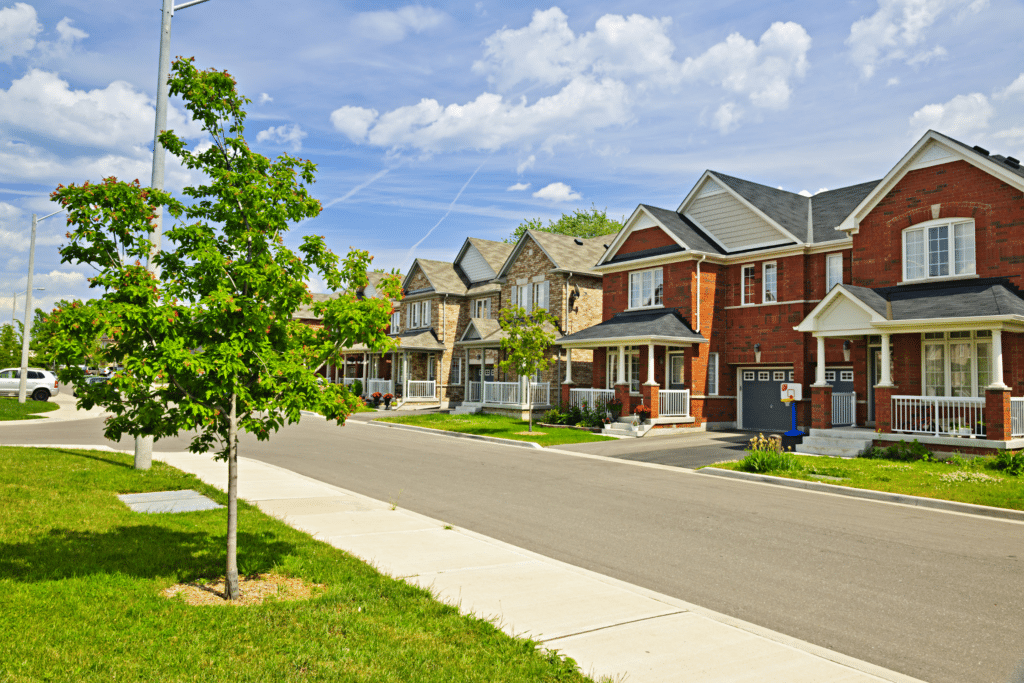 As we approach the end of 2023, many HOAs are knee-deep in budget planning for the upcoming year. One important topic that can’t be ignored is asphalt maintenance and repair. Not only does it boost your neighborhood’s curb appeal, but it also plays a vital role in ensuring the safety and satisfaction of your community’s homeowners.
Fortunately, planning for asphalt maintenance doesn’t have to be a hassle. With some careful consideration and a strategic approach, you can ensure that your neighborhood roads stay smooth and reliable, promoting a sense of pride and well-being among residents. In this blog, we’ll dive into essential tips and insights to help you navigate HOA asphalt maintenance effectively.
The Importance of Asphalt Maintenance
Before delving into the nitty-gritty of budgeting, let’s first understand why asphalt maintenance is so crucial. Asphalt surfaces, whether they’re roads, driveways, or parking lots, are continually exposed to the elements. Sun, rain, snow, and daily use can gradually wear them down, leading to cracks, potholes, and other forms of damage. If not addressed promptly, this damage can spread, affecting the foundation and leading to costly repairs.
Neglected asphalt isn’t just unsightly—it can also be a safety hazard, increasing the risk of accidents and liabilities. On the other hand, well-maintained asphalt surfaces can greatly enhance the appeal of your community, boosting property values and increasing resident satisfaction.
Planning for Asphalt Costs
When budgeting for asphalt costs, it’s important to consider factors that impact the expenses you can expect for asphalt repair. Here are a few things to keep in mind:
- Current Condition: The current state of your asphalt surfaces — and the sub-base below — will greatly influence the cost. Regular inspections can help identify issues early on, allowing for preventative maintenance instead of more costly repairs down the line.
- Size of Area: Naturally, larger areas will require more materials and labor, increasing the overall cost.
- Type of Maintenance Required: Different types of maintenance come with different price tags. For instance, simple crack filling is less expensive than complete reclamation.
- Inflation: Remember to account for inflation when planning your budget. The cost of raw materials and labor can fluctuate over time.
HOA Budgeting Tips
To maintain a solid budget for HOAs, it’s crucial to build reserves for asphalt maintenance. Here are some tips to help you out:
- Conduct Regular Reserve Studies: A reserve study is an essential tool for understanding the current condition of your community’s assets and predicting future costs. It’s recommended to update the reserve study every 3-5 years to consider changes in material and labor costs.
- Set Reserve Fund Targets: Just like any other financial goal, having a clear target can help in planning the reserve funds. These targets should be based on the results of the reserve study, and they should take into account both routine maintenance and potential repairs.
- Increase HOA Dues Gradually: Instead of burdening the community with a sudden increase or a special assessment, consider raising HOA dues incrementally over several years. Even a small annual increase can add up significantly over time, helping to bolster reserve funds.
- Implement a Strategic Communication Plan: In addition to setting targets, it’s also vital to have a strategic plan on how to reach these goals. This plan should include regular communication with homeowners about new requirements and the overall financial well-being of the association.
- Seek Professional Guidance: Engage professionals like reserve analysts or paving estimators. They can provide valuable insights on cost-effective maintenance strategies, optimizing your budget and protecting your HOA’s investment.
Following these steps, HOAs can ensure sufficient reserves for asphalt maintenance on community road ways, paths, and paved lots, avoid special assessments, and maintain safe and attractive communities.
The Long-term Benefits of Regular Maintenance
While allocating funds for asphalt maintenance might seem like a significant expense now, it’s important to view it as a long-term investment. Regular maintenance can drastically improve the lifespan of your asphalt surfaces, reducing the need for complete overhauls and saving you money in the long run.
Preventative measures like crack filling, seal coating, and regular cleaning can keep your asphalt looking new and prolong its durability. This proactive approach not only cuts costs but also minimizes disruption to your community.
Plus, by planning ahead, your HOA budget won’t be hit with unexpected costs further down the line. Don’t let a poorly maintained surface result in costly repairs and surprise fees for your community. Take control by proactively maintaining your HOA asphalt surfaces.
Let Ace Paving Help You Plan
At Ace Paving, we understand the unique challenges that HOAs face when it comes to asphalt maintenance. We’re here to help you plan effectively and efficiently, ensuring you get the most out of your budget while keeping your community looking its best.
Our team of experts can provide a thorough assessment of your current asphalt surfaces, suggest preventative maintenance plans, and offer cost-effective solutions tailored to your needs. With our help, you can avoid unexpected expenses and special assessments, leading to happier residents and a healthier bottom line.
Don’t wait until it’s too late. Start planning your 2024 asphalt maintenance budget today with Ace Paving, and invest in the longevity of your community’s paved surfaces.
Improve Community Appeal with Well-Maintained Roadways, Sidewalks, and Walking Paths
 Well-maintained infrastructure, such as roads, sidewalks, and walking paths, is crucial for enhancing a community’s appeal. Not only does maintenance provide safe and convenient routes for vehicles and pedestrians, but it also improves the aesthetics of the neighborhood and boosts property values.
Performing routine inspections for cracks, potholes, and other issues helps prevent expensive repairs and future damage. By understanding the importance of maintenance and knowing when it’s time to invest in repairs, you can help preserve the integrity of your community’s infrastructure, elevate property values, and create a better community for all.
Understanding Responsibility for Road Maintenance
In Georgia, like most states, the responsibility for maintaining roadways varies depending on the specific location of the roads. Determining who is responsible for maintaining roadways in Georgia depends on the type and location of the road, with responsibilities falling to either state agencies like the GDOT, local county or city governments, or community associations.
Here are some general guidelines for determining who is responsible for a road:
- If the road or sidewalk is within a private community, it is generally the responsibility of the community association or HOA.
- If it is within city limits, it’s maintained by the city.
- If it’s not within city limits, it’s maintained by the county.
- And if it’s a state route or interstate highway, it’s up to GDOT.
If you’re unsure who is responsible for a specific road or walkway, you can check with your county’s Public Works or Road Department:
- Atlanta: Atlanta DOT
- Alpharetta: Alpharetta Public Works
- Sandy Springs: Sandy Spring Public Works
- Marietta: Marietta Streets Division
- Decatur: Decatur Public Works
Recognizing the Need for Repair and Maintenance
While understanding who is responsible for road maintenance is crucial, so too is recognizing when and what type of maintenance is required. Here are some common repair and maintenance tasks that should be carried out regularly:
Pothole Repair
Potholes are a common issue in roadways. They occur when water seeps into cracks in the pavement, expands when it freezes, and then contracts when it thaws. This expansion and contraction can break down the pavement, creating potholes. If a road is full of potholes, it may be a sign that it’s time to resurface.
Crack Sealing
Cracks in a roadway, sidewalk, or walking path can allow water to seep underneath the surface, which can lead to more severe damage like potholes or subsidence. Regularly sealing these cracks can prevent further deterioration. Large, widespread cracks may indicate the need for more significant repairs or resurfacing.
Resurfacing
Over time, the surface of roadways can become worn and damaged. Resurfacing involves removing the top layer and replacing it with a new one. If the surface is extensively damaged or worn, you might need to consider resurfacing.
Sidewalk Leveling
Sidewalks can become uneven over time due to the ground shifting underneath them. This can create tripping hazards. If a sidewalk has multiple uneven sections, it may be time to have it leveled or replaced.
Drainage Maintenance
Proper drainage is crucial to maintain the integrity of roadways, sidewalks, and walking paths. Water that pools on the surface can lead to damage. If there are regular issues with standing water, it could be a sign that the drainage system needs to be repaired or improved.
Snow and Ice Removal
In colder climates, removing snow and ice from roadways, sidewalks, and walking paths is a crucial maintenance task. Failure to do so can lead to surface damage and safety hazards.
Signage and Marking Maintenance
Regularly checking and maintaining any signage or markings (like crosswalks or lane lines) is important for safety and compliance. If these are regularly worn or damaged, it could be a sign of larger issues with the surface material.
In general, staying on top of these tasks can extend the life of your roadways, sidewalks, and walking paths. However, if you’re regularly seeing severe or widespread damage, it might be a sign that it’s time to invest in more significant repairs or even replacement.
Determining the type of repair needed will depend on a careful inspection of the condition of your foundation — a task best left to pavement experts.
Enhancing Communities through Sidewalks and Walking Paths
Roadways, sidewalks, and walking paths significantly contribute to a community’s appeal. In suburban and metropolitan areas, there is a growing demand for pedestrian-friendly environments. Installing sidewalks, walking paths, and ADA-compliant walkway ramps enhances walkability and inclusivity, making the community accessible for everyone.
Ace Paving partners with city planners, community associations, and commercial property owners to design and install sidewalks and walkways that improve accessibility, mobility, and connectivity. Creating ADA compliant parking lots, pathways, and entry/exit ramps is essential for commercial and retail properties to ensure equal access, avoid legal consequences, and foster an inclusive environment.
Maintaining our roadways, sidewalks, and walking paths goes beyond safety and legal responsibilities. It enhances the appeal of our communities, making them attractive places to live, work, and visit.
Get Expert Paving Advice From Ace Paving
If you’re looking to improve your community’s appeal through well-maintained roadways, sidewalks, and walking paths, Ace Paving is here to help.
Our team of professionals can guide you in choosing the best paving and concrete solutions to make your community shine. We’ll assist you in determining a maintenance plan to keep these surfaces strong and attractive for years to come. Contact us today and let’s work together to create a more appealing, safer, and walkable community.
Your Guide to Asphalt Upkeep: Milling and Resurfacing vs. Patching and Repair
 As a property owner or manager, you’ve got a lot on your plate. From maintaining curb appeal and value to keeping your property presentable and safe, every detail matters. One detail that often gets overlooked is asphalt maintenance. But why should maintenance be a priority? And more importantly, how do you decide which services you need or when it’s time to seek out expert help?
This is where Ace Paving steps in. Our knowledgeable team is here to take the stress out of pavement maintenance. We provide expert guidance on how and when to take action to ensure the strength and durability of your paved surfaces.
The Importance of Asphalt Maintenance
Asphalt maintenance might not be the first thing on your mind, but it’s an essential aspect of property management. A well-maintained pavement doesn’t just contribute to a great first impression; it also ensures the safety of those who use it.
Over time, asphalt surfaces can develop cracks, potholes, and other forms of damage due to various factors such as deteriorating sub base under the asphalt, weather conditions, usage, and natural wear and tear. Left unattended, these damages can escalate, leading to costly repairs and even potential liability issues.
While there are upfront costs associated with procedures like patching, milling, and resurfacing, these measures can significantly extend the lifespan of your pavement. By addressing minor damages early, you can prevent them from escalating into major issues that require costly repairs or complete pavement replacement.
Recognizing the Signs: When Should You Consider Maintenance?
Recognizing the signs of wear and tear can save you time, money, and prevent further damage. Here are some signs that you might need to consider milling and resurfacing or patching and repair on your asphalt surfaces:
- Alligator cracking: Large, interconnected cracks that extend into the lower layers of your asphalt can indicate serious damage and structural issues.
- Potholes: If your driveway or parking lot has developed potholes, it’s not just an eyesore — it’s a safety hazard too.
- Drainage Issues: If water regularly pools on the surface of your asphalt after rain, this could indicate an issue with drainage, which can lead to water damage and compromise the integrity of your pavement.
Milling and Resurfacing vs. Patching and Repair: The Key Differences
Two of the most popular methods of asphalt upkeep are milling and resurfacing and patching and repair. While both techniques are effective for preserving paved surfaces, they serve different purposes and dependent on the condition of the asphalt.
Milling and resurfacing involves removing an entire asphalt structure or only a layer of asphalt, grinding it down to ensure a smooth surface, and then applying a new layer of asphalt. It’s a comprehensive solution that addresses underlying issues and provides a fresh, durable surface that can last for years to come.
Patching and repair, on the other hand, focuses on specific areas where damage has occurred. This could be cracks, potholes, or other forms of wear and tear. The damaged area is removed and replaced with new asphalt. It’s a fix that addresses isolated problem areas but may not always address potential underlying issues.
The most important factor in determining which method of repair or replacement is best for your situation is determining the condition of the underlying sub base beneath the damaged surface. Ultimately, the longevity of any method is dependent on your foundation, and some foundational damage may require a full-depth reclamation in order to rectify it.
Given the potential consequences and costs of incorrectly maintaining your asphalt, it’s best to leave this assessment to experienced professionals.
Choosing the Best Option for Asphalt Maintenance
When deciding between milling and resurfacing or patching and repair, here are some questions to consider:
- What is the extent of the damage? If it’s localized to specific areas, patching might suffice. But if the damage is widespread, including cracking or multiple potholes, milling and resurfacing might be more appropriate.
- What is your budget? Patching is generally less expensive in the short term, but if your surface requires frequent patches, resurfacing could be a more cost-effective long-term solution.
- What is the age of your pavement? Older pavement may benefit from a complete resurface to address any potential unseen issues and extend its lifespan.
- What maintenance has your pavement already undergone? If your pavement has already had several overlays or repairs, there comes a time when the surface cannot handle more layers without causing further damage as a result of the surface height. In this instance, you may need to have your surface milled and resurfaced.
When considering which maintenance option to go with, some of the most important factors to consider are cost-efficiency and durability:
Milling and Resurfacing
- Cost-Efficiency: More expensive than patching, but less expensive than a full-depth reclamation or replacement.
- Durability: Milled and resurfaced asphalt can last for 10 years or more, extending your surface’s overall lifespan and avoiding costly full replacements.
Patching and Repair
- Cost-Efficiency: Easy and least expensive short-term solution, but will likely require more frequent repairs.
- Durability: Temporarily fixes minor damage, such as potholes, cracking, and uneven surfaces. Depending on the flow of traffic, this solution may only last several years and will eventually require further repair to avoid damaging the asphalt further.
Leaning on Ace Paving’s Expertise
At Ace Paving, we understand that these decisions can be complex. That’s why our experienced team is ready to assess your specific needs, lot conditions, location, and usage to help you make an informed decision. We believe in establishing partnerships with our clients, ensuring that you receive the best solution for your unique situation.
Whether it’s milling and resurfacing or patching and repair, Ace Paving has the knowledge, tools, and experience to deliver high-quality results. We invite you to reach out to us and let us guide you in maintaining the integrity and appearance of your commercial spaces. With Ace Paving, you’re not just getting asphalt maintenance — you’re getting a partner committed to getting the job done the right way, the first time.
Remember, regular care and maintenance of your roadways and lot surfaces is an investment in the longevity and safety of your property. So, don’t hesitate to contact us today to discuss your paving needs.
Navigating Atlanta’s Seasons: Year-Round Asphalt Care Tips
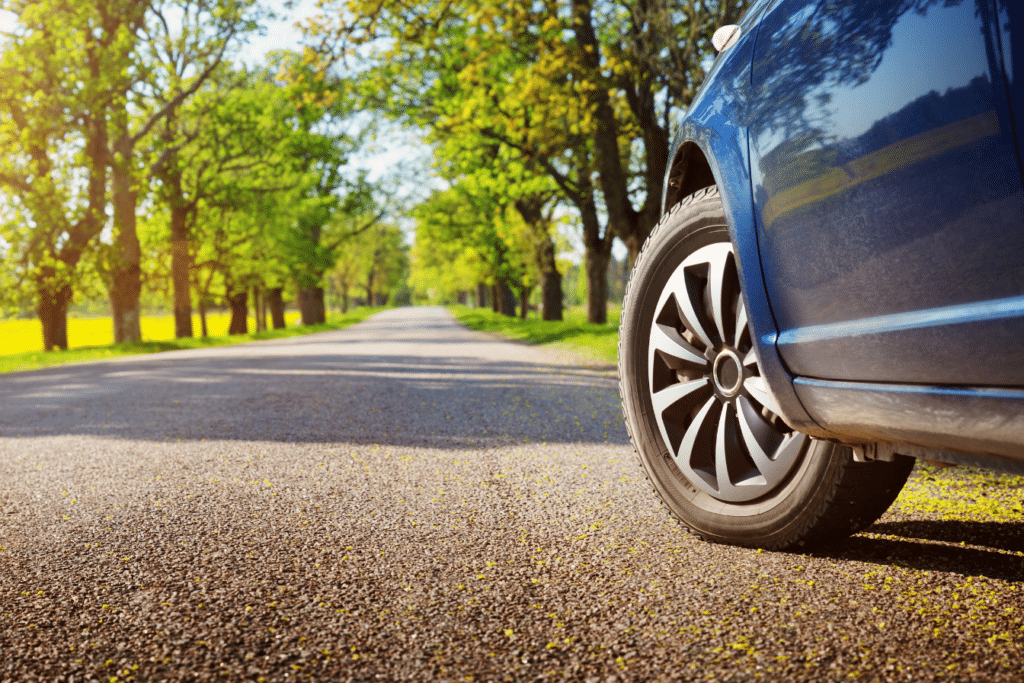 Atlanta’s weather is as diverse as its culture. Hot summers, sudden rain showers, and the occasional winter chill each year bring unique challenges for asphalt placement. In our climate, keeping your asphalt in top shape all year round requires careful attention and expert care. Luckily, Ace Paving has the expertise to keep your pavement in top condition no matter what the weather throws its way. With years of experience under our belts, we know exactly how to handle the correct application of asphalt placement around Atlanta’s climate to keep your asphalt looking and performing its best.
Summer Care Tips
Summer in Atlanta can be tough on asphalt. High temperatures and intense UV rays can cause the asphalt to oxidize, making it brittle and faded over time. To combat this, sealcoating is essential. This protective layer shields your pavement from the sun’s harmful rays and helps maintain its vibrant appearance. Minimizing the oxidation process extends the life of the asphalt structure.
Another summer issue is when the heat softens the asphalt, leading to cracks, ruts and depressions under heavy traffic. Ace Paving keeps your pavement smooth and safe during the scorching months with regular inspections and timely fixes.
Prepping for Summer Storms and Rain
Atlanta’s summer storms can be sudden and intense, bringing heavy rainfall that poses a significant risk to asphalt pavements. Proper drainage is key to stopping water from sitting on the surface, which weakens the base and leads to cracks.
At Ace Paving, we recommend regular drainage system inspections and repairs to keep your pavement in top condition. Additionally, crack filling is vital to prevent water seepage, which can lead to even more serious damage. Taking care of these problems right away saves you from pricey repairs later on.
Winter Weather Protection
Winter in Atlanta might be mild, but freeze-thaw cycles can still wreak havoc on asphalt. When water enters small cracks and freezes, it expands and causes the cracks to widen, leading to significant damage over time.
Fall Preparations
As fall approaches, it’s essential to clear debris from your asphalt surfaces. Leaves and organic matter can trap moisture, leading to deterioration. End-of-season inspections are also key to spotting and fixing any issues before winter sets in.
Thorough inspections help spot potential problems early. Taking a proactive approach ensures your pavement is ready to face winter without any nasty surprises.
Year-Round Maintenance Strategies
Maintaining your asphalt pavement requires a comprehensive year-round plan. Here are some simple tips you can follow to protect your pavement throughout the year:
- Regular Inspections: Schedule frequent inspections to identify and address minor issues before they become major problems.
- Sealcoating: Apply a seal coat to protect against UV rays and weather damage, maintaining asphalt’s appearance and durability.
- Proper Drainage: Make sure your drainage systems are working well to avoid water pooling and potential damage to your foundation.
- Crack Sealing: Regularly fill cracks to prevent water seepage and further deterioration.
- Debris Removal: Make sure to sweep asphalt surfaces clear of leaves, dirt, and debris to prevent moisture buildup and surface damage.
- Timely Repairs: Address any ruts, depressions, or other damages promptly to maintain a smooth and safe pavement.
- Seasonal Preparations: For seasonal upkeep, think about tasks like deicing in winter or checking drainage before summer storms hit.
Why Choose Ace Paving for Seasonal Maintenance
Working with Ace Paving means partnering with a team that has over 25 years of unparalleled experience. We customize our services to fit exactly what your pavement needs, ensuring high-quality results every time.
At Ace Paving, we understand that the quality of our work makes all the difference. We take care of every part of your asphalt maintenance, from the first inspection to the final touch-ups. We believe in doing things the right the first time, every time, so that your pavement stays durable and reliable for years to come. With us on the job, you can relax knowing your asphalt is in good hands and built to last.
Asphalt Maintenance FAQs
How often should I have my commercial asphalt inspected in Atlanta?
Regular inspections are recommended at least twice a year, ideally in spring and fall, to catch and address issues early.
What is the best time of year to apply seal coating in Atlanta?
Sealcoating is best applied from April through October when temperatures are moderate, allowing for proper curing.
How can I protect my asphalt pavement from Atlanta’s summer heat?
Sealcoating and crack sealing provide a protective barrier against UV rays, and regular inspections and prompt repairs help maintain the pavement’s integrity.
What steps should I take to prepare my asphalt for winter?
Clear debris, inspect for cracks, apply a sealant if necessary, and use non-corrosive deicers like sand or kitty litter to prevent freeze-thaw damage.
Can rain during Atlanta’s summer storms cause long-term damage to asphalt?
Yes, without proper drainage and crack filling, water can seep into the pavement and cause significant damage over time.
Protect Your Pavement Year-Round with Ace Paving
Atlanta’s weather can be tough on asphalt, but with the right maintenance strategy, your pavement can thrive through every season. Trust Ace Paving’s expertise to guide you through all your asphalt care needs. From summer seal coating to winter preparation, we’ve got you covered. Don’t wait until your pavement starts to show wear and tear—reach out to Ace Paving now and let’s get started on your asphalt care plan.