
 When customers pull into your parking lot, the condition of your asphalt says a lot about your business. Cracked, faded, or uneven pavement doesn’t just hurt curb appeal. It can cause safety hazards, drainage problems, and even liability issues.
If you manage a shopping center in Buckhead, an office complex near Downtown, or a warehouse along Fulton Industrial Boulevard, your pavement faces constant stress. The key to avoiding major replacement costs is catching the early warning signs before they spread.
Let’s look at seven signs your Atlanta property needs commercial asphalt repair, along with what you can do once you spot them.
Key Takeaways
- Atlanta weather and traffic often damage asphalt, causing cracks, potholes, fading, and other visible signs of wear.
- Each issue, such as loose gravel or standing water, shows deeper pavement problems that need quick professional attention.
- Regular inspection, crack repair, sealcoating, and patching keep Atlanta asphalt strong and safe for daily use.
- Reliable care helps local businesses maintain smooth, durable, and professional-looking parking lots year-round.
1. Potholes Forming After Heavy Rain
Atlanta’s weather swings between hot summers and sudden downpours, which can quickly worsen small cracks into full-blown potholes. Parking lots along Peachtree Road or near Lenox Square often face water pooling that seeps beneath the surface, weakening the base.
Once water freezes in the winter or sits too long during rainy weeks, the asphalt breaks apart. Potholes not only damage vehicles but also create safety hazards for pedestrians.
2. Faded or Graying Pavement Color
Asphalt that once looked deep black but now appears faded or gray is a clear sign of oxidation from constant UV exposure.
Between the intense Georgia sun and high traffic near areas like Midtown or the BeltLine, the binder in the asphalt starts breaking down. When this happens, the surface becomes brittle and more vulnerable to cracking and water damage.
3. Standing Water After Storms
If puddles remain long after the rain stops, your parking lot might have drainage problems or surface depressions. In low-lying areas such as those around the Chattahoochee River or near West End, poor drainage accelerates asphalt deterioration.
These dips trap water, allowing it to penetrate the surface and compromise the foundation.
4. Cracking Across the Surface
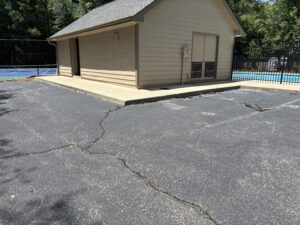
Cracks are the earliest warning signs of trouble. From spiderweb-like “alligator” cracks near entrances to long linear cracks running through delivery zones, each type signals a different underlying issue.
In Atlanta’s fluctuating climate, expansion and contraction cycles from temperature changes cause cracks to spread fast if left untreated.
5. Uneven or Sinking Areas
When certain spots begin to sink or feel uneven underfoot, the sub-base has likely shifted or eroded. This often happens in older business parks around Decatur or industrial zones near Fulton Industrial Boulevard.
Heavy trucks, delivery vans, and poor soil compaction can all contribute to surface depressions that require immediate attention.
6. Loose Gravel or Deteriorating Edges
If you notice loose gravel forming at the edges or along drive lanes, your asphalt surface may be unraveling.
This is common along driveways leading into older properties or near loading docks. The problem usually starts at the edges where the asphalt meets grass or dirt, allowing moisture to penetrate and erode the binding materials.
7. Faded Striping and Traffic Markings
When the lines designating parking spots, crosswalks, or directional arrows fade, it’s more than a cosmetic issue—it affects safety and compliance. Businesses along busy corridors like Howell Mill Road or near Georgia Tech need clear markings for smooth traffic flow.
If your striping looks worn, it’s a sign your surface has aged and could benefit from sealcoating or repairs before repainting.
Steps to Take When You Notice These Signs
Schedule a Professional Inspection
The first step after spotting any of these signs is to call a professional paving contractor for a detailed inspection. In Atlanta, an experienced team can assess whether your lot near Ponce City Market or the Perimeter area needs crack sealing, resurfacing, or full reconstruction.
A thorough inspection ensures you address root problems instead of just surface symptoms.
Sealcoat to Protect from Future Damage
Sealcoating every few years helps protect your asphalt from UV rays, oil spills, and water penetration.
For Atlanta businesses with high-traffic lots, such as restaurants in Virginia-Highland or retail centers in East Atlanta Village, this preventive step can double the lifespan of your pavement while keeping it looking sharp and professional.
Repair Cracks Early
Crack filling should never be postponed.
Once moisture enters, it widens and deepens the damage. In areas like Sandy Springs or Brookhaven, where tree roots and shifting ground are common, regular crack repair prevents expensive structural repairs later. Professionals use hot rubberized crack sealant that adapts to Atlanta’s seasonal temperature swings.
Patch Potholes Promptly
Potholes left unattended grow quickly, especially with constant rain or traffic.
Proper patching involves cutting around the hole, cleaning out debris, applying tack coat, and compacting fresh asphalt. Fast action keeps your lot safe for vehicles and prevents liability issues—a must for businesses near downtown or airport traffic.
Address Drainage and Grading Issues
If water pools in your lot, drainage improvements are essential.
In flood-prone areas like near Peachtree Creek or the South River, adding or regrading drains can save your pavement from early failure. Professional contractors can also install proper slope gradients to ensure rainwater flows away from the surface efficiently.
Refresh Pavement Markings
Once the asphalt is repaired or sealed, repainting parking lines and directional markings restores both functionality and curb appeal.
Using high-visibility, reflective paint ensures compliance with ADA and safety regulations—particularly important for public areas around downtown offices and medical complexes.
Set a Maintenance Plan
A consistent maintenance schedule keeps your investment protected year-round. Atlanta’s mix of hot summers and occasional ice in winter means you should plan inspections and minor asphalt repairs twice a year.
Partnering with a reliable paving company ensures small issues never turn into major disruptions for your business.
Protect Your Pavement Investment Today
At Ace Paving, we help Atlanta businesses keep their parking lots and driveways in top condition year-round. From crack sealing and pothole repair to sealcoating and re-striping, we handle every stage of asphalt care using materials built for Georgia’s climate. If you’ve noticed any of these warning signs on your property, now’s the time to act before small issues become major repairs.
Contact us today to schedule your commercial asphalt inspection and keep your Atlanta property safe, attractive, and ready for business.
Frequently Asked Questions
How long does commercial asphalt repair usually take in Atlanta?
Most commercial asphalt repair projects in Atlanta take one to three days, depending on the property size and damage level. At Ace Paving, we plan repairs efficiently to reduce downtime and restore full access quickly.
What type of asphalt mix works best for Atlanta’s weather?
Hot-mix asphalt formulated for Georgia’s climate provides the best durability. Ace Paving uses high-quality materials designed to handle Atlanta’s heat, humidity, and rainfall, giving commercial properties smoother, longer-lasting pavement surfaces.
Can asphalt repairs be completed during the winter months in Atlanta?
Yes, asphalt repairs can be performed in cooler months using cold-mix materials or heated solutions. Ace Paving adapts to Atlanta’s seasonal conditions to ensure durable results and consistent pavement performance year-round.
How often should a commercial parking lot be resealed in Atlanta?
Commercial parking lots in Atlanta typically need sealcoating every two to three years. Ace Paving recommends regular resealing to block UV rays, prevent moisture intrusion, and keep surfaces looking professional longer.